Sunday, June 13, 2010

Baccala al Prezzemolo

This recipe is a long-time favourite from Elizabeth Romer's "The Tuscan Year", and attributed to her friend (and subject of the book) Silvana. It takes a bit of preparation and time but not a lot of effort - it's a good one for the weekend.

Baccala

It always feels slightly ridiculous to pay more for baccala than for most kinds of fresh fish but it should be no great surprise. After all, prior to refrigeration a lot more effort was required to make sure fish could be kept for the innumerable Catholic fasting days (which, for Fridays at least, are still recommended).

Cod was plentiful through the middle ages, but not everywhere and not throughout the whole year, so for many centuries baccala was a major source of Friday protein. Baccala can safely be eaten during Lent without fear of The Man Upstairs Who Could Visit You With Plague And Could Do Scary Stuff With Lightning, so for most of history, baccala was what you ate when you were doing penance or abstinence. It is to fresh fish what ham is to pork - a means of once tiresome preservation, no longer required but still desired for its flavour.

Ingredients

Pellegrino Artusi, the nineteenth century author of La scienza in cucina e l'arte di mangiare bene (The Science of Cooking and the Art of Eating Well) managed his reader's expectations by telling them not to expect too much of baccala, and that seems to have been the spirit of the times. Like going to Church, it was dead boring but you did it because you had to. Artusi actually says at the end of his recipe for Baccala Fritto, "If ... you still find this to be an inferior dish, it is your fault for wanting to try it." So, having dampened your enthusiasm, why not try this wonderful dish? The fish has a dense, almost chewy texture and soft, creamy-fish flavour.
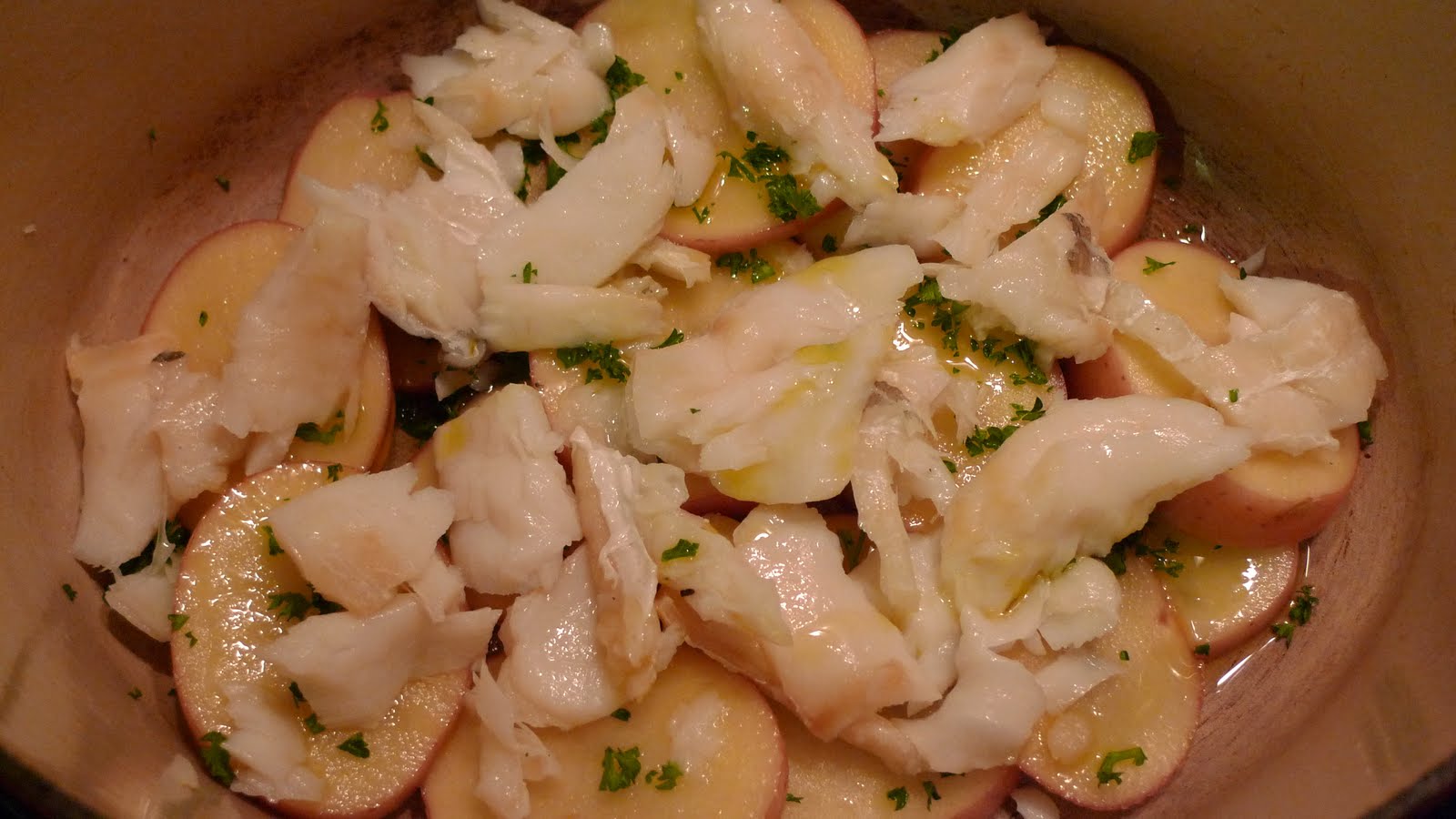
Layered fish and potatoes

So, the recipe.
  • 1kg or so of baccala. Whatever you do, remember baccala's the salty one - don't try and use stockfish which have been mummified instead of salted.
  • 500-700g potatoes
  • an onion
  • half a bunch of parsley
  • olive oil
  • a few ripe tomatoes
The day before, take the fillets of baccala and soak them in a lot of water for a day. Change the water a couple of times - there's a shirt-load of salt in them and things will get nasty if you don't. Gently simmer the fish in just enough water to cover for about 30 minutes and cool in the liquid. Flake the fish (removing the bones) but not too finely. Chop the parsley finely.

Hmmmmm....

Thinly slice the potatoes and the onion, and in a heavy casserole lubed up with olive oil, make layers of potato, fish, onion, parsley, anointing each layer with a drizzle of olive oil and a grind of pepper. Drizzle a little (a few tablespoons only) of the liquid the fish was cooked over the top and then add the sliced tomatoes. Stick into the oven for an hour or so until the potatoes are soft and have absorbed the flavours of the fish, onion and parsley. Fragrant and comforting - not a grand and pretentious dinner, but a warm and friendly dish for a cold winter weekend.

Sunday, June 6, 2010

Anada Bar & Restaurant

A sign!
I know it appears our devotion to High Street waxes and wanes, and I know that Anada is technically not on High Street. It is, however, on the same tram route as High Street, and the very same tram (Route 86, for the Melbournians) that takes us from home to work every day passes Anada. That's damn close to close enough for us to meet our mission statement, so we'll treat it as being in the general purview of High Street. (See that? I wrote "mission statement" without vomiting!)

Inside

Anada is a small Spanish restaurant with a menu of tapas and raciones (which are, basically, big tapas) in the short, sexy segment of Gertrude St in Fitzroy. I booked an hour or two before (we were skiving from an official Event) and we were offered an early sitting. I was a bit concerned about being rushed given recent experience, but I will generally crawl naked over broken glass for great Spanish food and a glass of fine fino sherry so we pressed ahead. Luckily the evening we were not rushed, no-one was required to go tackle-out and broken glass was not involved.

We snacked high on the food chain and the souls of many dear, departed woodland creatures and their seaside brothers were dispatched in the interests of.. well... yum, basically. We ate:


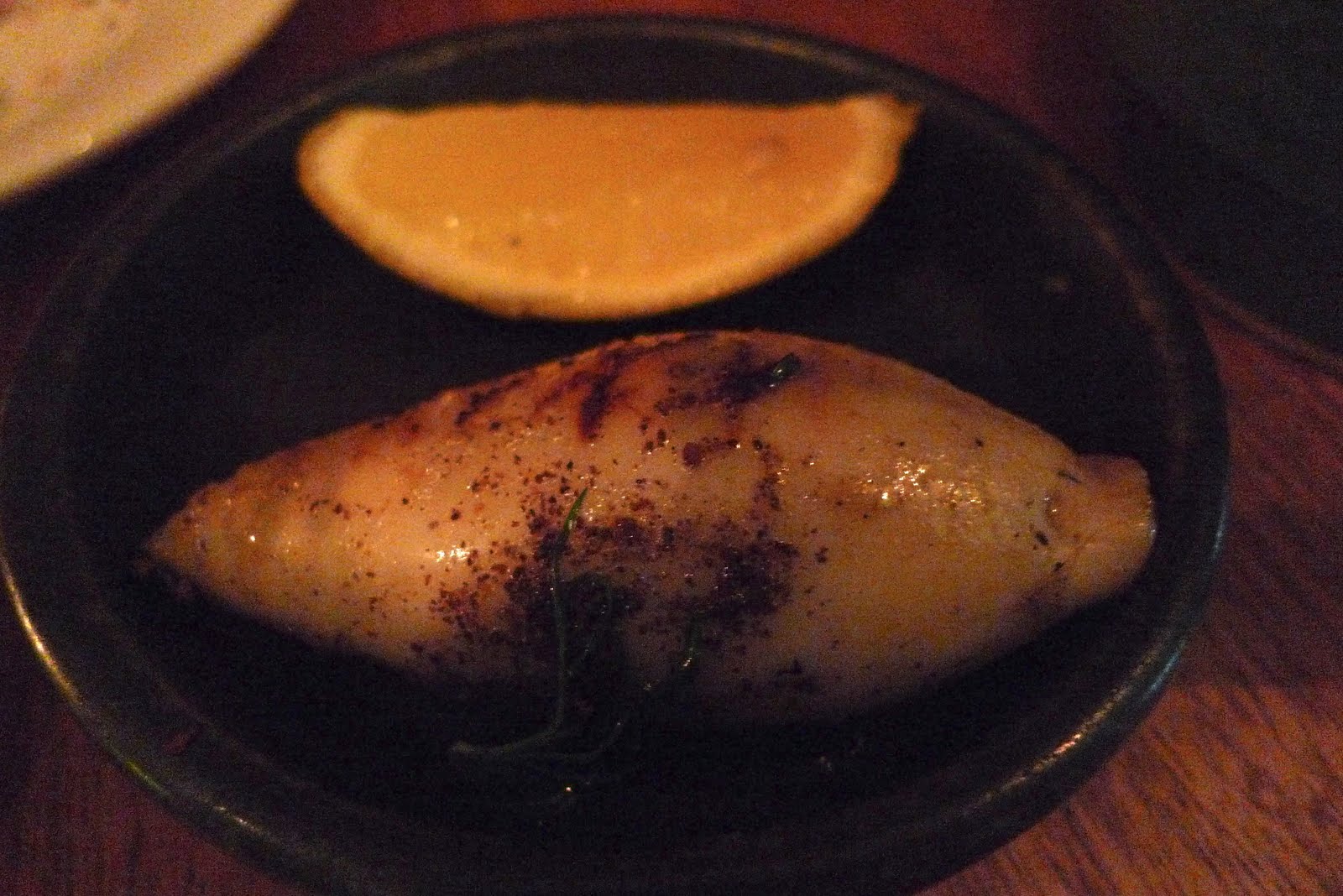
Calamari
  • Barbecued and stuffed calamari with sumac - these were tiny and wee, with a softly-scented fragrant filling. Cooked perfectly - we ordered a second.
  • Salt cod and garlic shoot croqueta - I'm a sucker for salt cod (more of which in the coming weeks) and salt cod croquettes are one of those favourites that I could never be bothered making myself. In this case they were crisp on the outside and creamy-smooth on the inside - almost too creamy-smooth, like custard. Nice, but not outstanding like so many of the other dishes.
  • Rabbit empanadilla - Yum! Perfect light pastry crunch with meaty filling that had the subtle game-like smell of pounced bunny with a gentle sweet spice (cinnamon?).
Sweet little quail
  • Grilled quail with frekeh and pomegranate salad - Another that we ordered twice. The quail was juicy, charcoaled goodness, although was probably cooked slightly longer than it needed, but the salad was gorgeous. F, who has no qualms about noshing sweet little birdies (despite the plaintive looks of the woman at the local butcher's shop), and who generally turns up her nose at the word "salad", rated the salad on par with the quail. Wow.
Even the salt was pretty
  • Crumbed lambs brains with pork belly red lentils -The crumb was large-grained and perfectly crisp and the brains were as rich as brains should be. The highlight was the balance between the lushness of the brains and the (what I think was) sauce of bread and sherry vinegar. I could be wrong on the sauce, but not on the strength of this dish.
Serrano Jamon
    • Serrano Jamon - This was paper-thin and almost melted in our mouths. The flavour was perfect - just enough salt to balance the dry ham while still being joyfully fatty enough to melt away.
    • Beetroot and mint salad with labne - A lovely foil to the some of the more rich dishes.
    Eating pork belly
    • Pork belly with fennel seeds - see that expression up there? That was the pork belly. The skin was light and crunchy while I could have eaten the meat with a teaspoon it was so soft and unctuous... The almost licorice-flavour of the fennel was pronounced but not overpowering while the lusciousness of the meat and fat was almost overwhelming. Now, I confess that I'm a big pig fan, but this was something else. Extraordinary.
    All in all a huge success. The service was fabulous (despite the time pressures); the food was brilliant and the atmosphere, even in a packed restaurant where we sat very closely to our neighbours, was intimate. The service was wonderful and attentive without being weird; the room was intimate without being perverse and both the noise and the light was low. We felt welcomed. We'll go back, but we'll take others with us to share.

    Friday, June 4, 2010

    Pizza Meine Liebe

    With wonderful English understatement, Pink Floyd's drummer Nick Mason once described the months before the band tore themselves apart in a whirlwind of mutual loathing with the sentence, "things got so bad, someone almost said something." And that's how we felt about Pizza Meine Liebe and why we won't be going back.

    Pizza Meine Liebe is a few doors up from the brilliant Estelle, and has a plain but inviting front room surrounding its pizza oven. It looks like a suburban pizza shop from 1980 set in a shopfront from the 1960's, which is obviously very Northcote, what with nostalgia having only been invented in 1952.

    Outside

    We'd been told over the phone that they had two sittings and we booked for an earlier sitting, knowing we wouldn't be able to linger. That should have been ok.

    Only once before on High Street had we been told we were booking in the earlier of two sittings and that was at Otsumami. Our experiences couldn't have been more different. At Otsumami we never felt rushed; we were served quickly but not once did we feel under any pressure to order or to eat faster. At Pizza Meine Liebe, however, we felt continually pressured to order, to eat and to leave. We were not even half way through our pizza when we were asked if we wanted dessert. We declined.

    We ordered four pizzas, a truffle-paste-and-potato pizza that was resplendent with the heady scent of the great black stuff; another with potato, caramelised onion and Taleggio (which was beautiful); one with mozzarella, mushrooms and rocket; and something called a superMario which, although generous with anchovies, was not nearly as interesting as the ingredient list had suggested. The bases were lovely - just thin enough and chewy with puffy edges and the toppings erred on the side of excess.

    The truffle and mushroom paste one

    A pear, walnut and fetta salad was alright. Nothing more to say. The wine list was short but good and we had a bottle of breezy sangiovese.

    The service wasn't rude, but it was perfunctory and focused on getting us out of the door. Pizza Meine Liebe was also, without question, the noisiest place we've been to on High Street and the volume was, frankly, unbearable.

    The mushroom one

    It's a shame, really. Pizza Meine Liebe makes good pizzas that compare well to its neighbours, although it's nowhere near the best in the area. Both I Saluti and Pizza Farro are on par, with Pizza Farro being better than Pizza Meine Liebe, but both have the bonus of welcoming service and not feeling like you're in cattle class. At Pizza Meine Liebe I felt like just another inconvenient customer gumming up the efficient operations of a restaurant.

    Of course, if you don't mind going a little further to North Fitzroy, Supermaxi is in a different class altogether. Their pizzas are a little better but their other dishes are suburb and the service, even in a place so busy, was excellent.

    Pizza meine liebe? Nein danke.

    Thursday, June 3, 2010

    Brillat-Savarin and the very bonnest of mots

    A small divertissement, if you will be so kind as to indulge me.

    This week I’ve been reading Brillat-Savarin’s “The Philosopher in the Kitchen” and it’s wonderful. I have a modest passion for the history of cooking and attitudes towards food and I’ve been meaning to read this for a while, but F dropped a copy in my lap and it’s been good cheer ever since.

    Jean-Anthelme Brillat-Savarin wrote at a time when hyphens were plentiful and Napoleon was fading from memory. He was a lawyer and a politician, a violin player and teacher. His legend was written with the release of his “The Physiology of Taste” and dashed when he became the spiritual leader of Iron Chef.

    It’s fun in the twenty-first century to read Brillat-Savarin and to savour the gap between his world and ours. For example, he offers a typology of gourmands which elevates the love of food to something close to deity. Some of us are doomed to be denied the pleasures of the (cooked) flesh, whilst others are born to lustfully enjoy oral (and gastronomical) sensual pleasures. To quote the man, “I believe in innate tendencies.” You either have it or you don’t.

    Savarin (the cake, not the man)
    photo by flickr user open-arms

    The revolution is clearly long gone in France by the time Brillat-Savarin writes, and for him a man must be measured by his birthright (and his inherited assets). You can either enjoy the culinary arts with a pleasure that glides from the curves of velvety sensuality to the apex of fiery lust, or you can eat shit and die like a peasant. Are you with us, or do you smell like a turd in a barn? Anyone who calls financiers “the heroes of gourmandism” did not live in the same century as Macquarie Bank or Goldman Sachs.

    Brillat-Savarin’s taxonomy of gourmands suggests his higher thoughts were well and truly taxed. Gourmands were born, and these could be spotted at a distance by their “ unusually acute perception of certain sensations” and a passion that “acts on the muscles… and… leaves visible traces, and so give a permanent and recognizable character to the physiognomy.”

    Indeed, those predestined to be gourmands are “generally of medium height; they have round or square faces, bright eyes, small foreheads, short noses, full lips, and well-rounded chins.” Except, of course, for the women who love sweet things, for they, “have finer features, a more delicate air, neater figures, and above all, a very special way with their tongues.” Nurse!

    Of course, those who “refused an aptitude for the pleasures of taste, have long faces, noses and eyes, whatever their height”… I’ve got a bad feeling that could be describing me.

    In any event, Mr Brie has been a jolly good read and there’s much I want to share, cut into fat slices as befits a nineteenth century gentleman and gourmand, so over the next few weeks I’m going to dip into the old Jean-Anthelme Yeast-Cake and pull out some of the bonnest of mots. Bon appetite!

    Saturday, May 29, 2010

    Rillettes de porc

    Roasted garlic for roast lamb

    In the spirit of posting something, but still not having eaten on High Street for a bit, I offer you the following visual evidence of food. Yes, I'm sure you've seen food before, but this is what it looks like in our house. Or at least what it looks like when it's worth getting the camera out...

    So in the last post I was making quince jelly. It's now finished, jarred up and being eaten rapidly. We swapped a jar for Emma's quince paste, which was equally magnificent.

    Quince jelly

    I had a crack at making rillettes de porc for the first time in mmmyears. Next time I'm going to be the bunny and try rabbit rillettes - the pork was lovely (and I love pork) but this pig richness needs some rabid wildness for balance.

    Pork, garlic, salt, pepper and bay leaves

    The recipe is from the big orange book. A kilo and a bit of pork belly is skinned and chopped into pieces, and is then rubbed with about a tablespoon of salt and put in the fridge overnight. Dump into a heavy casserole with a couple of cloves of garlic, some thyme, bay leaves and pepper. *Just* cover with water and a lid and put into a slow oven for a couple of hours. Drain, taste for salt, shred, add the liquid back and pack into bowls or ramekins. Seal with a kiss and with lard. Eat with cornichons, crusty bread or toast and a glass of vin ordinaire. Have cholesterol tested. Panic.

    porc de rillettes

    Hopefully there'll be some more posting about High Street food soon.

    Monday, May 17, 2010

    Home Cooking is Killing Fast Food


    Well, despite the objections of George, Madonna, Adam and Kylie et al, we continue to indulge in home cooking. Although we suffer constant threats of legal action from the restaurant industry we soldier on in the face of starving artists. Yes, I understand that every meal I cook at home is taking money out of the mouths of desperately thin restaurateurs and critics, and yet somehow I continue to live with myself. We shopped hard at Preston Market on Saturday and we enjoyed every moment. Relentlessly.

    I'm not ashamed to say that this week we went nuts. We ate like champions. We snacked high on the food chain and when we looked down, we sneered. Like a God-like hungry caterpillar, we chomped our way through the lesser beings, one after another, and then we stood triumphant, slightly moist and quite salty, but we had devoured all before us.

    On Saturday we ate oysters

    We ate oysters with Guinness and bread

    Later, okra was involved

    ...in a prawn curry

    The prawn curry was directly copied from a Television Production as aired the night before. It wasn't as good as I'd hoped - it ended up with too much tamarind and its fruity sourness was just a little too clever and not charming enough. And it was very, very brown.

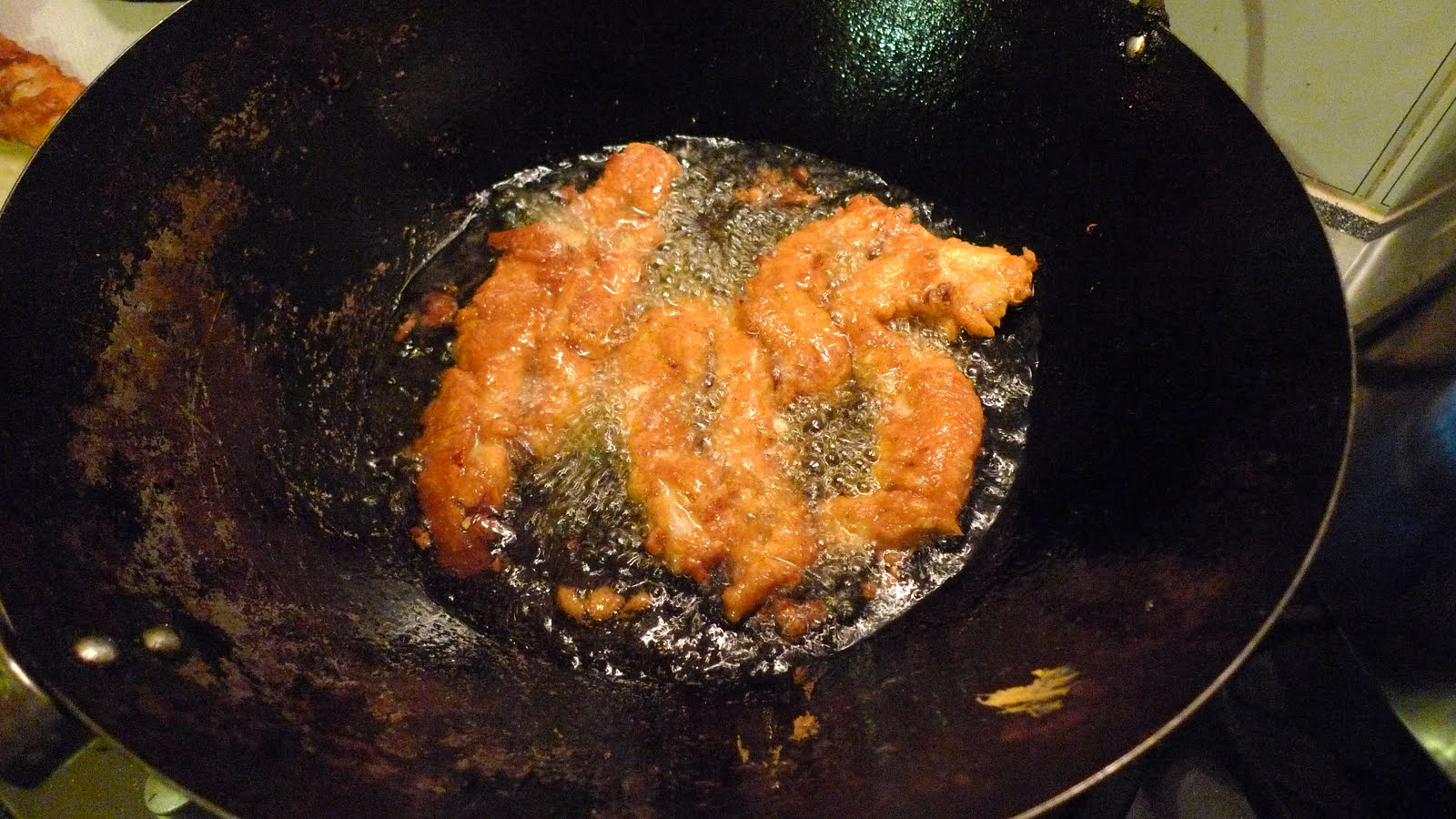
    But on Sunday night we had fish. Easy fish, because it was Sunday, but good fish, because it was flatheat. It was easy (as mentioned) and fried in a batter that included spices I really can't remember but look quite pretty in the photo.

    On Sunday we made batter...

    ...for flathead. It was good.

    On Monday we had veal. There aren't any photos, but it still happened. And then on Tuesday we had beans with speck and some German smoked sausages. They were fantastic. Mr 15yo had been nagging since the weekend, and with just cause.

    ...and beans on Tuesday. It was very good too; very good.

    The other thing that happened on Tuesday night was the Significant Fruit Conversion. Some ugly yellow fruit was taken and elevated into something approaching rapture. Quinces were vigorously jellied with malice aforethought; their step towards the divine almost complete upon mad, mad boiling.


    Quinces, pre-conversion


    Mid-conversion....
    And it was fabulous.

    Sunday, May 9, 2010

    Cheese Club Six - Revenge of the Curds

    Hardcore Neutrality

    Cheese Club has returned, this time with revenge, vengeance, more revenge, a club with nails in it and a glass of wine. Oh, it's had sand kicked in its face by a buff lifesaver before, but now it's back with cheeses strong and ruthless enough to melt your head from the inside out. So surrender now, before Cheese Club gets all fromagier on your arses (or "asses" for our American friends).

    Perigord goo

    Besace Chevre Affine - After the damning-with-faint-praise disappointment of the Le Chevrot during the last Cheese Club goat experience, expectations weren't high for the Besace. Expectations weren't helped by the sight of this ugly, abstract beast of a cheese. Between the normal wrinkles of a surface-ripened goats cheese; a light dusting of ash; a protuberant, translucent layer of soft-ripened flesh; and a shading of blue and grey mould over the surface, this cheese would strike terror into the weak of heart. But not into mine, oh no. And lo, I was rewarded, for this is a cheese of Perigord and 0f glory. Although it had a modest heart of chalky fudge, it was mostly surface-ripened gooeyness. It was light on the goat tang (while still being balanced) and rich in the layers of mould and flavour. Oh, I love this.... Oh... Oh... I'll umm... stop now. People are watching.

    Oh lord... Less than pretty. But so wonderful...

    Rouzaire Camembert - As regular readers (I'll return your mower on Sunday) will know, I'm historically not a big fan of the surface-ripened white-moulders, but you know what? I'm beginning to come around. We've had some great ones (the Brie de Nangus in particular) with deep, earthy flavours, and this Camembert is close to its equal in raw power. Still with a stripe of chalky crumblation in the center, it was soft but firm with a rich flavour of mushrooms and cauliflower. This is glorious, but in a relaxed way. It's still got a week before it ripens properly but still, eh? Eh?

    I want to believe

    Saint Vernier - This episode of Cheese Club was turning into a lesson of surprising power, but this is the exception that proves the rule. Washed rind in name; washed rind in appearance but white-moulder in taste. Weirdly, this was a far milder cheese than the Camembert. A glorious orange tint underneath a white-mould fuzz, this looks like a small Camenbert that's been inadvertently tinted. And that's what it tastes like. It has a subtle washed-rind stink (if that's not a contradiction in terms), but once you taste it you wonder where all that smell went to. This still has some chalk in the centre, so I'll give this one a couple of weeks and see what happens. Sweet packaging by the way: it nestles softly in a plywood sunflower. Awwwwwww.

    Nothing to fear here

    Coolea - Coolea is an Irish, cow's milk cooked curd cheese in a Dutch style. Obviously. This was a couple of years old and was a luscious, buttery cheese with an intense nutty and caramel flavour. It still has a little cooked-curd smoothness, but with an almost imperceptible grain. It's not as an intense as the Lindenhoff, and thus isn't subject to enforceable standoff distances, but it is still wonderfully intense. Deep without being scary, like Radio National. Wash it down with a Toohey's Old or a 3 Ravens smokey one.

    Coolea than you'll ever be

    L'Etivaz - I have this ongoing problem reconciling my Cheese Club experiences with the proclaimed neutrality of the Swiss. This picturesque, peace-loving, clock-making nation, supposedly wielding nothing more dangerous than an implement designed to remove stones from horse's hooves, produces cheeses that our Aunt Agatha describes as "total ball-tearers". Of course, aunts have changed since Bertie Wooster had them, but these cheeses haven't. And L'Etivaz has all of the rich, grinding gorgeousness of an older, more voluptuous hard cooked curd cheese. Swiss cows that live downstairs in chalets; milk cooked over wood fires; banks that respect anonymity. What a life...

    L'Etivaz. Stand well back.

    Crozier Blue - Carrying on this edition's focus on intensity and approachability, the Crozier Blue is a blue sheep's milk cheese from Tipperary, meaning the UK is effectively surrounded by tart Roquefort-style cheeses, both East and West. I'd be surrendering pretty much straight away if I was them, hopefully to be welcomed into the creamy acidity. Lovely blue tart balanced with a soft texture, buttery but light. Again, a cheese intense but not overwhelming. This is an excuse to open a bottle of something sticky, and so I shall.

    Crozier Blue. Nothing to add.